Venus in Taurus · Ancient Cosmetics · Planetary Magic · The Art of Adornment
What if your eyeshadow carried more than pigment?
What if the emerald green adorning your eyelids could tell a story of ancient queens, the mineral treasures of the earth, the celestial influence of Venus, and the centuries-old relationship between beauty and magic?
As a professional makeup artist, astrologer, and ritual practitioner, I have spent years exploring precisely this intersection.
From the viral explorations of antique cosmetics by makeup artist Erin Parsons to the enduring fascination with Cleopatra's legendary beauty rituals, the history of eye makeup reveals something extraordinary: cosmetics have never existed entirely apart from the cultures, beliefs, and desires of the people who created them.
Long before the modern beauty industry, pigments were ground, blended, and applied to the human body. Their colors could express beauty, identity, status, religious meaning, and the aesthetic ideals of their time.
For me, this relationship between adornment and spiritual practice is not merely a historical curiosity.
It has become a defining element of ClaimedParadise.
With Kosmesis Talismanic Eyeshadow in Malachite, I wanted to revisit one of the most recognizable colors in cosmetic history and give it a contemporary Venusian expression.
A jewel-toned green inspired by the mineral malachite. A preparation conceived within my practice of electional astrology. And an extension of the collection born under Venus in Taurus in June 2025.
Because, diva, your eyeshadow deserves more than another trendy shade name.
It deserves a story written in the stars.
Discover Kosmesis Malachite Talismanic Eyeshadow
Kosmesis: The Ancient Art of Adornment
The Greek word kosmesis (κόσμησις) refers to ordering, arrangement, and adornment.
It is a concept that has captivated me throughout my career as a makeup artist because it describes something fundamental to the cosmetic arts.
Beauty does not emerge through color alone.
It takes form through the deliberate arrangement of materials, their relationship with the body, and the intentions of the person adorning themselves.
A carefully blended eyeshadow can transform the expression of the gaze.
A fragrance can make an ordinary evening unforgettable.
A favorite lipstick can become inseparable from the memories of an entire period in our lives.
The instruments of beauty have a remarkable capacity to acquire meaning.
As an astrologer, this has always fascinated me.
Traditional astrology offers an elaborate symbolic language for understanding the correspondences between earthly materials, planetary rulerships, and the qualities attributed to the celestial spheres.
Within this system, Venus governs many of the experiences I encounter daily in my profession: beauty, artistic pleasure, affection, sensual enjoyment, and the harmony of proportion.
Eventually, one question began to guide my creative work.
Could I bring the traditional methods of astrological talisman-making into conversation with modern cosmetic formulation?
That question became the foundation of Kosmesis.
From Puerto Rican Folk Spirituality to Planetary Magic
My relationship with ritual cosmetics began long before I created an eyeshadow of my own.
While studying Hellenistic astrology and the traditions of planetary magic beginning around 2020, I was also deepening my relationship with the spiritual practices that had shaped my life.
Espiritismo, Santería, and the broader world of Caribbean folk spirituality introduced me to ways of understanding materials that differed considerably from the language of the commercial beauty industry.
Oils, perfumes, herbs, and carefully prepared objects could become participants in spiritual work.
Within these traditions, trabajos—ritual workings undertaken for particular purposes—might incorporate materials associated with sweetness, affection, cleansing, protection, or personal presentation.
These practices possess their own histories and religious contexts. They are not interchangeable with Hellenistic astrology or medieval astral magic.
Nevertheless, my experiences encouraged me to examine how ordinary materials could acquire spiritual significance through preparation, intention, and ritual.
By 2022, I had begun experimenting with planetary oils and preparations from Sphere + Sundry, integrating them into my personal devotional practice.
My studies with astrologers including the podcast education shared by Chris Brennan and the Foundations of Astrology curriculum taught by Austin Coppock and work of Ali A Olomi further developed my understanding of traditional techniques, celestial timing, and the magical applications of planetary symbolism.
Meanwhile, my professional life was unfolding within the beauty industry and I traveled the world as a celebrity makeup artist.
The Vanity as a Modern Altar to Venus
Throughout years of makeup artistry, beauty campaigns, competitions, and collaborations with prominent figures in Latin music, Venusian devotional practices became a recurring presence in my work.
Some of these experiences unfolded behind the scenes of extraordinary productions, from red carpets to major entertainment venues in Puerto Rico.
I carried personal talismans, worked with fragrances and planetary oils, and incorporated my spiritual observances into the rhythms of professional life.
I came to associate this period with increasing confidence, artistic purpose, and professional growth.
Of course, the opportunities I received were also the product of years spent developing technical skill, cultivating professional relationships, and dedicating myself to my craft.
But spiritually, those experiences deepened my appreciation for Venus.
My vanity was no longer simply the place where I arranged brushes and pigments.
It became a place where my work as a makeup artist and my practice as an astrologer could meet.
And as much as I loved the planetary oils and talismans I had encountered, I kept returning to one particular idea.
What if the cosmetics themselves were conceived as ritual objects?
Not merely makeup with celestial imagery on the packaging.
Not another zodiac-inspired color collection.
But cosmetics developed through a deliberate relationship with historical astrological techniques and ritual preparation.
I wanted to explore beauty beyond its aesthetic associations with the planets.
I wanted to investigate its spiritual foundations.
Malachite: The Green Pigment of Ancient Egypt
The answer eventually led me to malachite.
Few minerals possess a visual identity quite like it.
Its extraordinary green bands, ranging from pale turquoise to rich emerald, resemble landscapes captured within a single stone.
Polished malachite has long been prized for its ornamental beauty, while the mineral itself has played an important role in copper extraction and the historical production of pigments.
For a makeup artist fascinated by the history of color, its relationship with ancient Egyptian cosmetics is particularly captivating.
Archaeological evidence establishes that malachite was ground into a green pigment used in Egyptian eye preparations.
Cosmetic palettes, mineral residues, and surviving containers document the importance of colored eye adornment throughout Egyptian history.
Dark eye paints made from other minerals, including galena, were also widely used.
While contemporary beauty culture often attributes particular preparations to Cleopatra, the strongest historical evidence points to broader practices in ancient Egyptian society rather than a verified formula belonging to the queen herself.
Still, what a magnificent inheritance of color!
Imagine the mineral being ground into powder, its emerald beauty transformed from stone into adornment.
A substance drawn from the earth becomes part of the face.
The gaze is framed by a material that once rested beneath the ground.
Through the art of cosmetics, the human body becomes a place where nature and artistry meet.
From Ancient Pigments to Modern Cosmetics
There is an important distinction between finding inspiration in historical cosmetics and reproducing their formulations.
Natural minerals are not automatically safe for application to the skin, particularly around the eyes.
Modern eyeshadows must use suitable cosmetic ingredients and color additives permitted for their intended use.
For this reason, Kosmesis Malachite does not contain actual malachite.
The name refers to the shade, the mineral's aesthetic history, and its symbolic relationship with the earthly materials that have fascinated artists for centuries.
The eyeshadow is a contemporary cosmetic creation inspired by malachite's remarkable green coloration—not a literal reproduction of an ancient Egyptian preparation.
My intention is not to return to the hazards of historical cosmetics.
It is to understand their beauty, appreciate their cultural significance, and translate that inspiration into a modern artistic language.
Venus and the Copper Queen
Malachite possesses another quality that makes it particularly meaningful within my work with Venus.
It is a copper mineral.
Within the traditional system of planetary correspondences, copper belongs to Venus.
This association establishes a beautiful symbolic bridge between the mineral history of malachite and the planetary philosophy behind Kosmesis.
It does not mean that ancient Egyptian green eye paint was universally understood as a ritual dedicated to Venus. Different cultures developed their own religious and artistic relationships with cosmetics.
Rather, the copper-bearing mineral became a source of inspiration through which I could bring ancient pigment history into conversation with my own Venusian practice.
And what better color for an eyeshadow dedicated to the celestial lady of adornment?
Green evokes the gardens of Taurus.
The fertility of cultivated landscapes.
The pleasure of beautiful materials.
The earth's wealth and the jewels drawn from its depths.
In Kosmesis, these associations converge in a shade intended to frame the eyes with a luxurious, mineral-inspired green.
A small piece of Venus's earthly kingdom.
Venenum: Love Potions, Pigments, and the Poisons of Venus
Another historical relationship makes malachite's story particularly fascinating.
During my studies of love magic with Julia Carreras Tort through Occvlta, I became increasingly interested in the ambiguous language surrounding magical preparations, attraction, and poison.
The Latin word venenum did not always refer exclusively to a deadly substance.Historical Latin usage encompassed drugs, potions, magical charms, and even coloring materials.An ingredient might be described as a remedy, a charm, a pigment, or a poison depending upon its application and context.
The Greek term phíltron (φίλτρον), associated with love charms and potions, offers another example of the complex historical relationship between prepared substances and the desire to inspire affection.
Within the history of magic, the creation of love potions raises important questions about attraction, agency, and the ethics of influencing another person's desires.
These traditions remind us that cosmetics have often existed alongside the histories of medicine, magic, and seduction. They also demonstrate why historical recipes must be studied critically rather than recreated without considering their safety.
For me, venenum offers an extraordinary literary metaphor.
The allure of Venus can be intoxicating.
Beauty can inspire longing.
A color may capture someone's gaze before a single word has been spoken.
But this fascination belongs to symbolism and artistic expression, not to the incorporation of poisonous materials into cosmetics.
Venus in Taurus: The Astrological Election Behind Kosmesis
Kosmesis's spiritual foundation comes from the astrological preparations I undertook during Venus's passage through Taurus in June 2025.
Within traditional astrology, Taurus is one of Venus's domiciles—a sign in which the planet is understood to possess particular authority over its significations.
Taurus is fixed earth.
Its symbolism evokes cultivation, permanence, sensual pleasure, and the deliberate enjoyment of material beauty.
These themes have always appealed to me as a practitioner concerned with the relationship between aesthetics and devotion.
The preparations that inspired Kosmesis took place around June 21, 2025, during Venus's passage through the second decan of Taurus.
The Second Decan of Taurus: The Garden of Venus
The zodiacal signs are divided into three sections of ten degrees known as decans.
Across the history of astrology, these divisions acquired a remarkable variety of images, planetary associations, and ritual interpretations.
Austin Coppock's 36 Faces: The History, Astrology and Magic of the Decans has been particularly influential in my exploration of these traditions.
In my practice, the second decan of Taurus has become an image of the cultivated Venusian garden.
A place where beauty, generosity, pleasure, and material prosperity require deliberate care.
Its traditional associations with wealth and attraction also invite reflection upon the responsibilities that accompany receiving affection and abundance.
That is the philosophical heart of Kosmesis.
Not an endless pursuit of more.
But the desire to recognize what already flourishes and nurture it with intention.
During the 2025 working, I prepared botanical materia associated with Venusian love magic, incorporating elements of that ritual framework into the development of the collection.
These preparations subsequently informed my approach to the cosmetics that would carry the name Kosmesis.
Their talismanic significance belongs to electional astrology, the practice of selecting moments considered symbolically appropriate for particular undertakings.
For readers interested in the original election and its symbolism, I examine its astrological reasoning in greater detail in my article on the birth of Kosmesis.
Read Kosmesis: Secrets of Venusian Adornment
Kosmesis Malachite: The Ardent Gaze
These studies led to the eyeshadow I had been imagining for years.
A rich green inspired by malachite's mineral formations, developed as an extension of my collection of Venusian cosmetics.
The original Kosmesis Talismanic Lipstick established the collection's relationship with color, the lips, and the sensual pleasures of adornment.
The Kosmesis Talismanic Lip Gloss explored the reflective qualities of light, transforming the lips into what I like to call a liquid mirror of Venus.
With Malachite Eyeshadow, our attention turns toward the eyes.
The Eyes as Instruments of Allure
There is something extraordinary about the expressive power of the gaze.
Before we speak, our eyes are already communicating.
Interest.
Affection.
Confidence.
Desire.
A carefully applied eyeshadow can transform the expression of the entire face without changing its underlying features. As a makeup artist, this is one of my favorite aspects of working with color: Green, in particular, can produce remarkable visual effects when paired with warm browns, dark liners, or luminous highlights that bring dimension to the eyelids.
With Malachite, I wanted to create a shade that felt precious and deliberate.
Not merely another green eyeshadow.
An ornament for the gaze, inspired by the copper-rich treasures of the earth and the symbolism of Venus in Taurus. The finished shade completes a beautiful conversation between the lips and the eyes.
The lipstick establishes the form.
The gloss captures the light.
The eyeshadow gives the gaze its enchantment.
Together, they express the philosophy of Kosmesis: beauty as a cultivated art.
Glamour Magic Beyond the Beauty Industry
The modern beauty industry is extraordinarily efficient at producing new colors, collections, and aesthetic trends.
I have spent much of my professional life within that world, and I remain deeply fascinated by the science and artistry that make contemporary cosmetics possible. Yet I also find myself questioning what becomes lost when beauty is reduced exclusively to consumption.
Another limited-edition palette.
Another celebrity name.
Another product promising that we will finally become desirable enough.
The commercial language of beauty can persuade us that our relationship with ourselves depends upon the next purchase.
Kosmesis was conceived from a different impulse.
I wanted to create cosmetics that carried a personal history, a sense of craftsmanship, and a deliberate spiritual philosophy. The history of planetary magic, the folk practices of my upbringing, and my years as a makeup artist all became part of that project.
My work also owes an enormous debt to the teachers and makers who helped me imagine these possibilities, including the creatrix behind Sphere + Sundry and the astrologers whose scholarship has informed my practice.
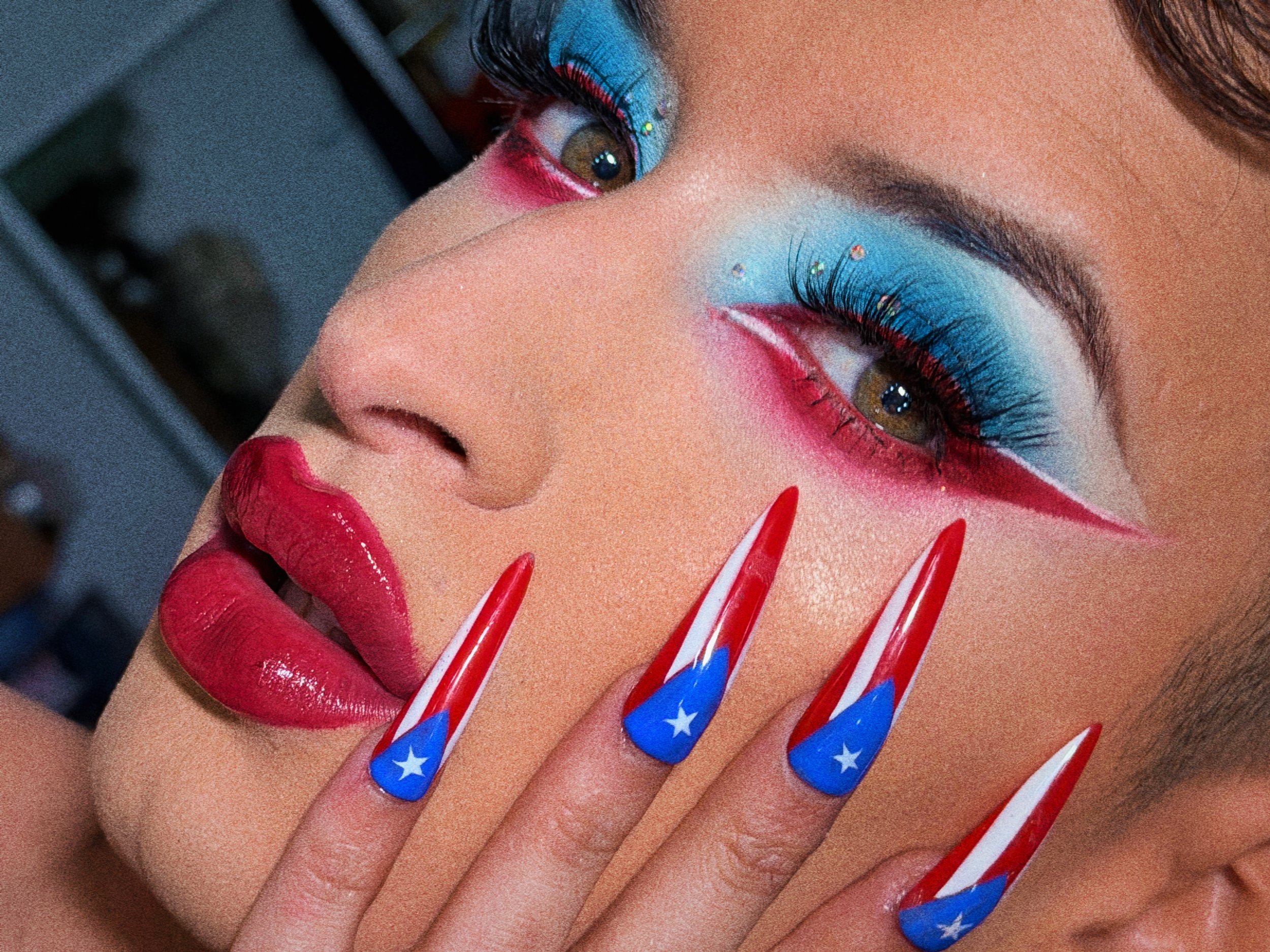
Eyeshadow look wearing Mar Chiquita talismanic eyeshdow + Unreleased Mars in Scorpio Red Lipstick.
Through this inheritance, ClaimedParadise continues to evolve.
Not because ordinary cosmetics lack meaning.
But because we can explore how much meaning we can cultivate through the things we already love.
The Ritual of the Gaze: Wearing Malachite
I believe the most beautiful rituals are often the ones we return to naturally.
For those wishing to incorporate Kosmesis into a personal Venusian beauty practice, the process can be as intimate as preparing the face with attention. Begin with your usual cosmetic routine, using products appropriate for your skin and the eye area.
Select colors that allow you to feel confident and expressive. Apply Malachite as part of your desired makeup look, allowing its green color to frame the gaze.
If it belongs to your spiritual practice, accompany the moment with a hymn, a prayer, or a personal expression of gratitude to Venus. Reflect upon the relationships, pleasures, and artistic endeavors you wish to cultivate.
What beauty is already present in your life?
What deserves greater attention?
What would it mean to approach your own reflection with tenderness rather than judgment?
Its talismanic significance belongs to the historical magical framework, personal intentions, and ritual practices through which it was conceived.
Its practical purpose remains that of a cosmetic: an adornment designed to bring color to the eyes.
And perhaps that distinction is precisely what makes the relationship so interesting.
Explore the Orphic Hymn to Aphrodite and Prayer to the Angel of Venus
Discover Kosmesis Malachite Talismanic Eyeshadow
MALACHITE — The Ardent Gaze of Venus
Venus in Taurus · Talismanic Eyeshadow · Mineral-Inspired Green
An emerald gaze inspired by one of the earth's most captivating green minerals.
Kosmesis Malachite Talismanic Eyeshadow celebrates the relationship between ancient pigment history, traditional astrology, and the contemporary art of adornment.
Conceived within the ritual philosophy of my Venus-in-Taurus workings of June 2025, this shade expresses the beauty, sensuality, and cultivated pleasures associated with Venus's earthly domicile.
Created for those who appreciate makeup as both artistic expression and personal ritual. Inspired by cultivating affection, confidence in personal adornment, artistic expression, and an appreciation for beauty.
Shop Kosmesis Talismanic Eyeshadow — Malachite
Pair it with the original Kosmesis lipstick or its golden holographic lip gloss to complete a Venusian beauty look.
For the vanity. For the artist. For the beauty you cultivate.
Glamour Magick Made Real.
A Little Piece of the Heavens, Worn Upon the Eyes
From the mineral palettes of ancient Egypt to the carefully selected astrological moments of contemporary ritual practice, cosmetics continue to tell stories about the human desire for beauty. Kosmesis Malachite is my contribution to that conversation.
It brings together the color of an extraordinary mineral, the symbolism of Venus in Taurus, the personal inheritance of my spiritual practices, and the artistic disciplines that have shaped my career.
Not every eyeshadow needs an astrological chart. But I find something extraordinary in the possibility of carrying the story of its celestial inspiration.
May your gaze remain ardent.
May the beauty you cultivate continue to flourish.
And may Venus always offer you another reason to adorn yourself.
From me to you, diva.
ClaimedParadise
Historical References & Further Reading
Ancient Egyptian Cosmetics
The Metropolitan Museum of Art — Egyptian Cosmetic Container. Archaeological evidence of malachite and galena used as eye paints.
University College London — Cosmetic Materials in Ancient Egypt. The historical use of malachite in Egyptian cosmetic preparations.
Classical Language & Magical Terminology
Lewis & Short — Venenum. Classical Latin definitions encompassing drugs, charms, poisons, and coloring materials.
Astrological Tradition
Austin Coppock, 36 Faces: The History, Astrology and Magic of the Decans. Historical and magical interpretations of the thirty-six zodiacal decans.
Cosmetic Safety
FDA — Eye Cosmetic Safety. Modern regulatory considerations for eye cosmetics and cosmetic color additives.
The magical and astrological associations described in this article reflect historical traditions and personal devotional practice. Talismanic cosmetics are not presented as guaranteeing supernatural, romantic, or financial results.
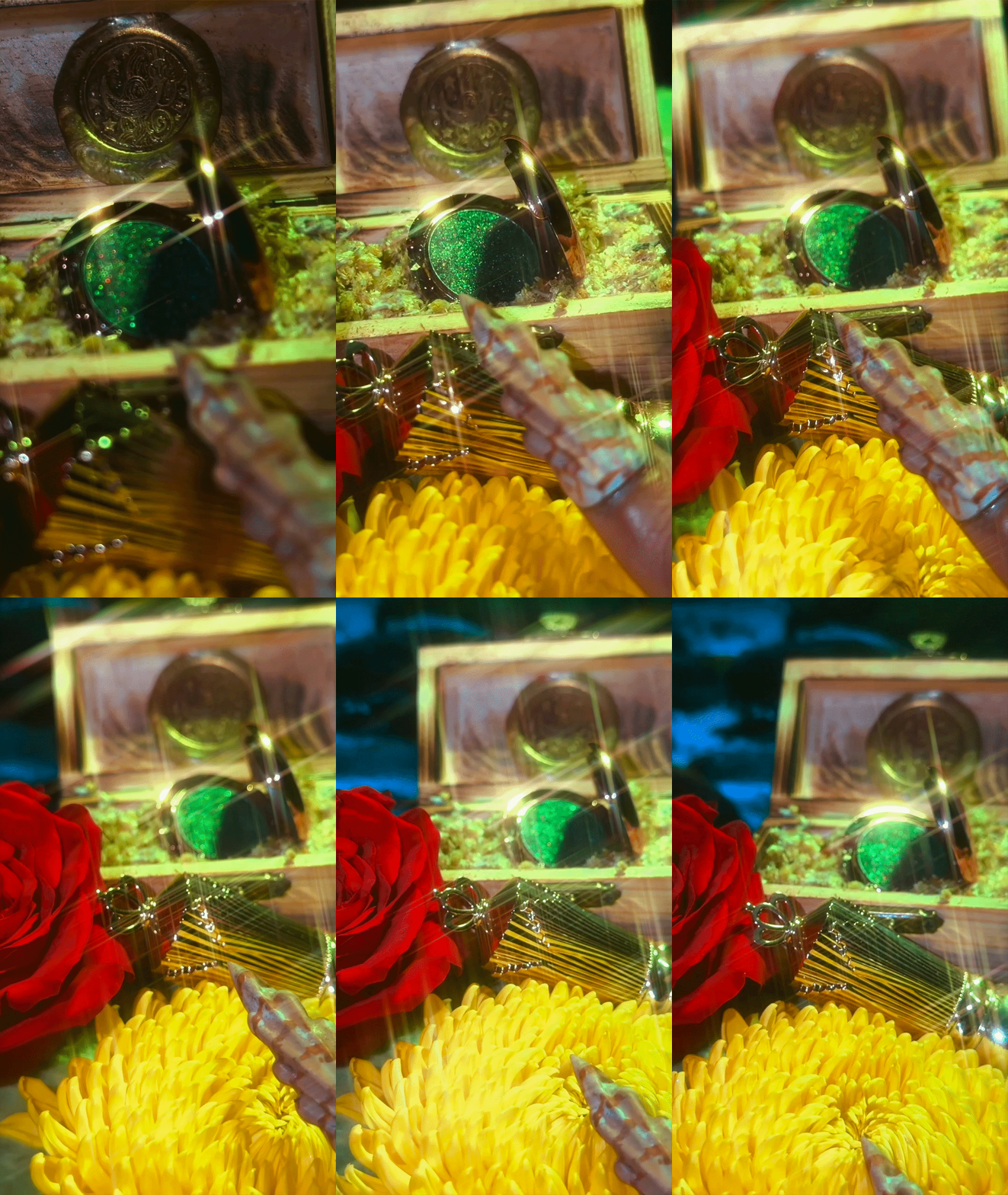
This talismanic eyeshadow is infused with the base herb from the working done for Venus in the Sign of Taurus on June 21st, 2025.
While the goddess rose in the second decan of Taurus, Amorous love powders were made that were pulverized and blended into the mica of this eyeshadow. This addition turns the ancient practice of turning the pigments of the earth into the celestial lens through which Venus allures and calls her lovers and desires.
This shade “malachite” does NOT have any actual malachite but shares the beautiful, deep green malachite-like color <3
Read more about the talismanic working*here*