Taurus Third Decan |The Horned Viper | BILUNGIAL
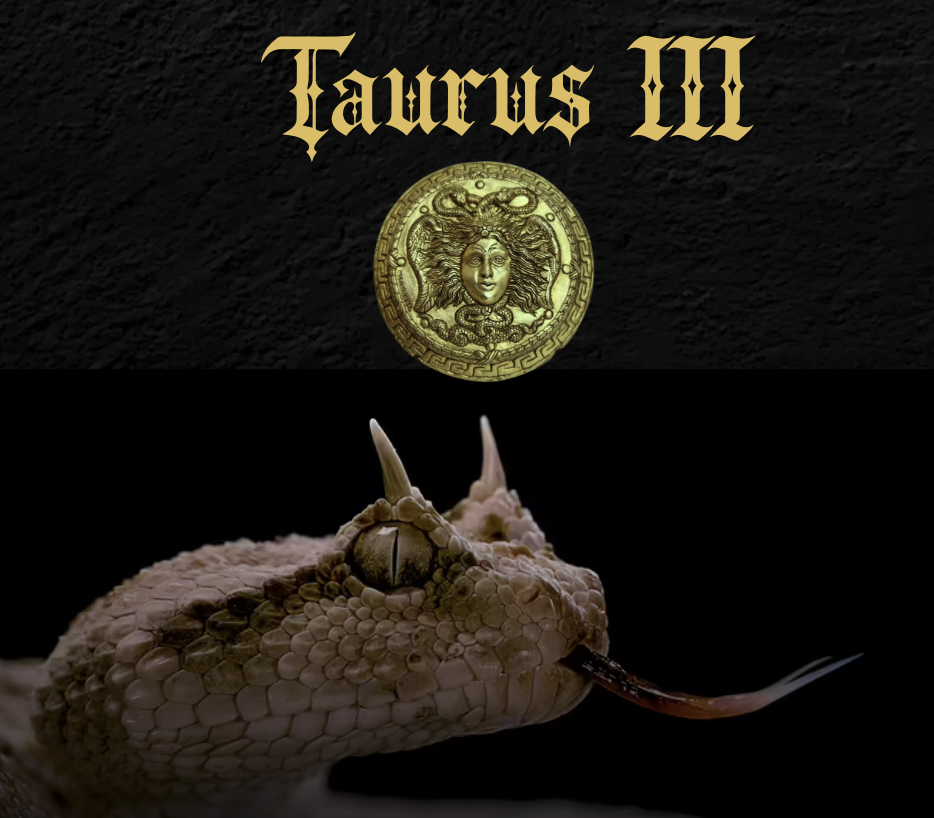
If you were born around May 11th, through May 20th, we see the Sun dancing through the third decan Taurus, the densest of places where humanity is but a mere caterpillar in the vast jungle and terrains of tribulations that make us question even our own creator.
“The third (Decan of Taurus) represents a confrontation with destructive factors that impede completion. Flood, drought, and pestilence enter here to ravage what has been planted. The dark titans of nature must be reckoned with.” - 36 Faces Taurus III
Yet the same storms stir within the individual’s breast, as well.
Forces beyond the human and akin to the Titans and Tainos deities like the Guabansex that came running down to destroy through the powerful Juracan (Hurricanes root word) or bless and promise another morning after the storms have subsided.
What are the Decans?
The Decans are an ancient 10-degree-based scheme of the zodiac that was implemented in the early scheme, but were not used with the same saturation and hue as the medieval world, igniting their essence, and took this scheme and added multi-cultural representations and emanations based on the lineage of sources they were handed down by the Hellenistic tradition.
In my research of this decan throughout history, referencing 36 Faces by Austin Coppock and The Great Introduction by Abu Mashar (Trans.Burnett, Charles), the reminder of the tribulations and tenacity those born with this part of the zodiac face so boldly. The support of spirit and the venusian daimons bring the aid and appease that which has been struck by the unseen forces.
As we have a new moon in this decan and visiting this project a YEAR later (true Taurean pace jajaj)! My gaze focuses on the ability of Taurus III to create roots so deep that not even the worst of winds can uproot that which we claim, nurture, and fortify in this sphere of the zodiac. Watched over by the fiercest and wish-granting daimones, Austin Coppock in Faces brings up the co-presence here of the Good Ladies (The Pleiades) sitting at 29 Taurus, amending and bringing the whispers of the celestial to soothe the mind as the spirits of water, earth, and fire dance to the Temporal.
“To pre-Vedic India, they were the seven mothers who judged men and sometimes wounded them with moon-shaped razors.
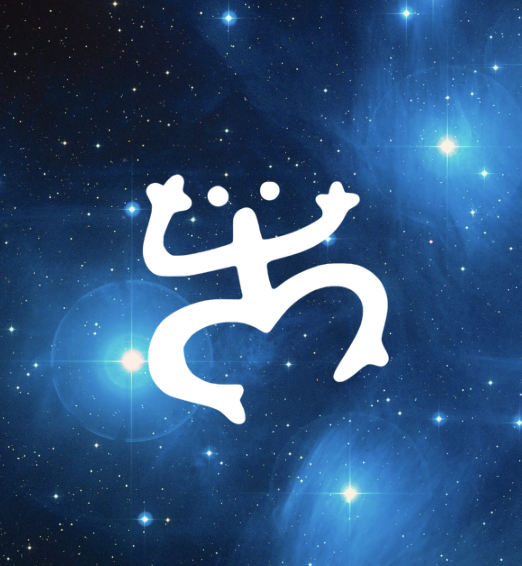
Taino frogs and Pleiades.
To the Egyptians, there were seven goddesses whom the dead had to encounter and by whom they had to be judged.— Under the Greeks, the Pleiades were part of an early cult of Aphrodite, who gave birth to seven daughters and turned them into a flock of doves that became the seven stars of the Pleiades. The leader of these doves was a dove-goddess.”
Burnedette Brady on the Pleiades
To the TAINOS, this star cluster represented the coming of the rainy season. In the ancient myths, the children of the caciques (shamans) ascend slowly and become a part of the Pleiades along with the association of the Antillean frog, as it croaking announced or provoked times of rain, delineated as “rain or vertical water”.
Essential to their myth-making and an interesting motif, this frog is the most tattooed in the Puerto Rican diaspora!
El cielo va oscureciendo - The sky is darkening
Todo es ansiedad - everything has anxiety
Ya se espera el cimbronazo - waiting for the shock
Va llegando el - it’s almost arriving.”
“Santa María, líbranos de todo mal - Virgin Mary, deliver us from all evil
Ampáranos señora del terrible temporal” - protect us from the terrible storm.
The sounds of the wind, the traditional folk guitar, and the background notes in the end evoke the Virgin Mary to aid in the midst of the storm, to protect and liberate us, reflecting the same traditions and ways people navigated these tumultuous spirits that brought these tests upon us humans. From the same hurricane that has displaced the island since 2019 to the many consistent demons and people in power that show up on the shores of the island and sell the beauty of the island for the highest bar of gold, to this day, the same question is asked by the people who are persevering not only against nature, but also colonization.
“¿Qué será de Puerto Rico, cuando llega el temporal?”
The Numen of El Yunque
The protective force that lives inside of those rainforests I have personally conjured both reverence and searching for friendship, and also seeking aid from the same devils that rise from these desolated places.
The story of her power and the fixed star Caput Algol being present in this third decan of the sky currently sitting at ‘26 Taurus, reminds us of the Gaze from the primordial ladies, demonized and cast away only to grow in power and become part of the cthonic retinue that showed up through the Latin diaspora as Santa Marta while finding myself in the jungles of el Yunqe.
For MANY of the uninitiated and unwise, it’s the stories of being lost and displaced in this same jungle that is known to be the landing place for otherness, devils, UFOs in modern world depictions, and even the folk story of a cacique tricked by that which lives at the top of what mountain? ¡PICO DEL TORO!
All reminiscent of the more shaded, otherly and chthonic epiphets associated with this star (Caput Algol), which is known for its darker context but never really understood!
ALGOL - Stemming from the Arabic ra's al-ghūl, meaning "head of the demon" (or ghoul), these spirits are classically known to be the vampiric and alienating energies in our sphere.
The Ghoul conceals their wickedness by leading us to loneliness and being astray. Ali A Olomi, in their podcast on the ghoul, says it's the “embodiment and threat of loneliness, that makes us dive into anything in search of a feeling that will not fulfill.”
Doctor Ali A Olomi also mention those who encounter the ghoul create pacts with these kinds of spirits will suck on the breast of the Queen of the Ghoul, adopting the monstrous and wicked parts of our sphere as an inherent part of our identity.
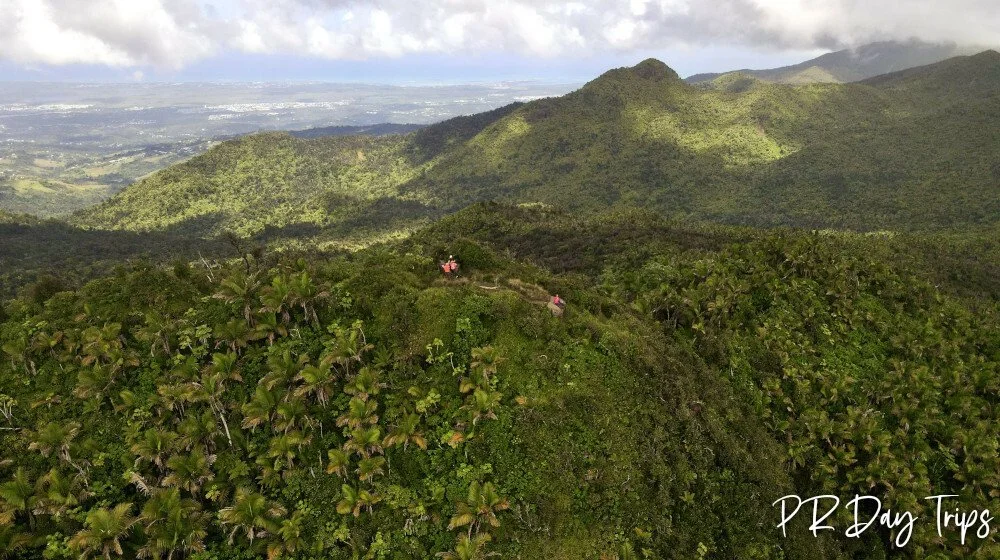
El Yunque
This new moon may ask us, how do we separate ourselves from the monstrous parts of ourselves?
The most interesting part of this research, in attempting to understand the etymology behind Algol’s name, is the mention that the ghoul eats humans who have been led astray and brought to these far and distant places, tribeless and vulnerable.
“When we return from the desert, consumed by the ghul, we in turn become a ghul and begin consuming others. We begin to feast on the flesh of those people who used to be our brothers and sisters. What then is the ghul and the ghula? It is the anxiety of desire without intimacy.”- Ali A Olomi.
Funny enough, this matches a story about a Cacique who was a shaman who went up to one of the peaks of El Yunque, Pico del Toro (horn of the bull), where the devil tricked a cacique and had them bound to a cave where they lure other caciques/members of the community to fall for the same fate.
With a specific day of the year, only where they are released for a single night. What an interesting parallel to the Arabic notions of being lost in the desert vs being lost in the rainforest, fortifying el Yunques myths as a place where otherness hunts the vulrneable. All folk tales warn of not visiting the depths of this rainforest without proper respect and knowldge.
Many people speak about a woman in white garments, who trails the lands near El Yunque and can be seen calling hikers and leading them astray as well.
These were all considerations taken when visiting this place and offerings left before and after the chthonic spirits of the rainforest showered their power to bless and also curse.
Encountering the Ghoul in El Yunque
top of el yunque trail.
After visting el yunque on multiple occasions and having encounters with these folk stories, what followed were dreams about the Tainos and people of Borinquen and the pains they suffered, being walked viscerally to the depths of the jungle only to be met by a conquistador and have very saturnian inflictions that only reflected to me the pain that still dwells in those trees and the many debts colonizers owe to that specific land.
With months of alchemizing, reflecting, and piecing together the many omens and secrets bestowed by the numen. With a lipstick to thank for its protection…
“Even my close friend, someone I trusted, one who shared my bread, has turned against me.”
To walk alongside a Ghoul and place myself in the hands of an initiation, looking back at taking Kosmesis to the “white lands” as the Tainos called it.
The most benevolent spirit, Yucahu, was offered Jovial offerings, keys with crowns, and libations in search of community, stability, and exaltation in friendship.
The descent of spirit and RAIN (clock the Pleiades present) was the result of this initiatory rite, along with the promise of my Saturn in Taurus bringing forth the Temporal.
To reach the state of launch on August 18th, I ascended from the trails of the Angels in El Yunque, blood, sweat, malefica, terrors, and omens from my own family about the dangers that were knocking at each door searching for my fortuna.
My own VOICE being taken, but they couldn’t break a soul that descended from these same mountains. The numen petitioned under the most auspicious skies for 12 years to come. The Jurancan descended, and by the time Bad Bunny hit the stage, the initiation into the Third decan of Taurus? complete.
Kosmesis and Medusa
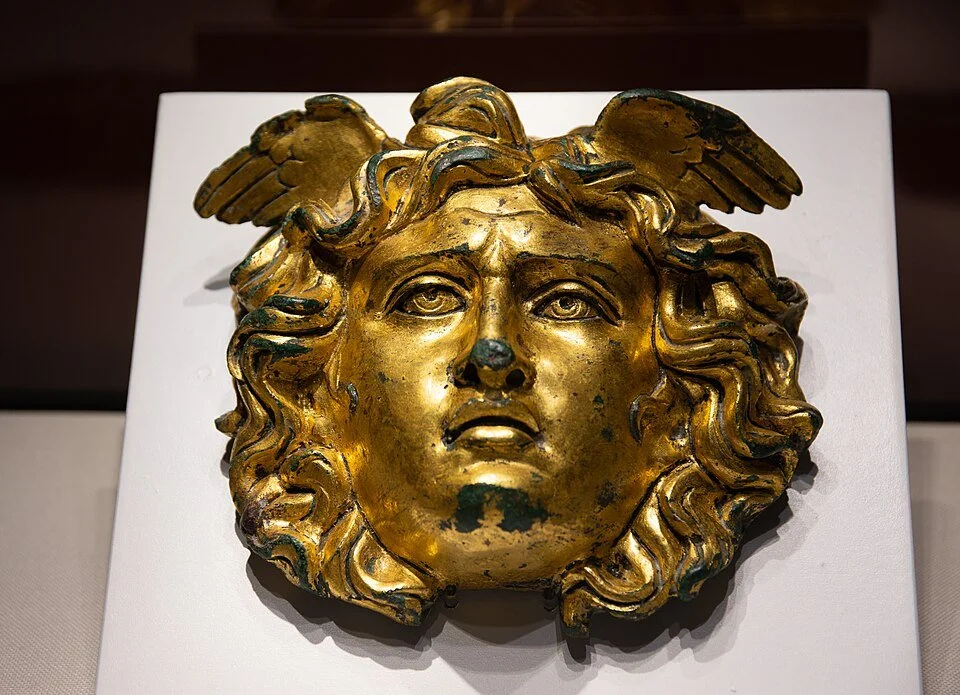
Aplique with the shape of Medusa discovered in Ulpia Traiana Sarmizegetusa
The creation of Kosmesis and placing the weight of exaltation in my sphere of community showed me the price and power of Talismanic Magic from the Ancient world.
These rituals and rites change literal fates, and while actively engaging with one of the ripest times of magic in my home island, the spirits taught me the lessons, power, and responsibility of what I had conjured and created, and who I brought into my home.
While Algol promises being led astray and the chaos behind the envier, the whisperer, and those who tie knots, the tenacity of prayer, literal ancient wisdom, and intervention from the benefic spirits we tend and nurture in our Taurean gardens, turn stone into emerald and challenge the ghouls’ gaze.
We cannot forget this Iconagraphy comes after the depiction of men who fall for the same temptations of Beauty and Allurement, to be fascinated by a muse is to become a statue in her garden of delights. What power did Lady Athena desire, and how much is the task from the king and the rise of the slayer of dragons, Perseus, considered in the rendering and historical depiction of this muse?
Clarissima forma
gorgoneis nec pars potuit laudatior illa
luminibus plures capitis concurrere proci.
invidiose comam dominam legisse refert:
hanc pelagi rector templo vitasse Minervae
dicitur. aversa est faciemque inproba palla
gorgone velavit Pallas neve hoc inpune fuisset,
gorgoneum crinem turpes mutavit in hydros."
— Ovid, Metamorphoses (4.794–801)
Translation:
“The most brilliant form could not be more praised than that of the Gorgons (Medusa’s hair), and many suitors flocked to the lights of the head.
He reports that he enviously read the lady's hair: it is said that the ruler of the sea (Poseidon) avoided the temple of Minerva. She turned away, and her face was covered with a gorgon's cloak; nor did Pallas, lest this should go unpunished, change the Gorgon's hair into the foul waters.”
She was cursed for a man’s actions. How does this tell us about ancient cultures’ fears about the other, the stranger, and beautiful people from other lands?
Where her blood spills, seaweed becomes red corals, ancient atropaic talismans for protection to this day. In the scorching Saharan Desert? Venemous Vipers are attributed to her venomous sting in the Argonautica as well, grown from the spilt drops of her blood.
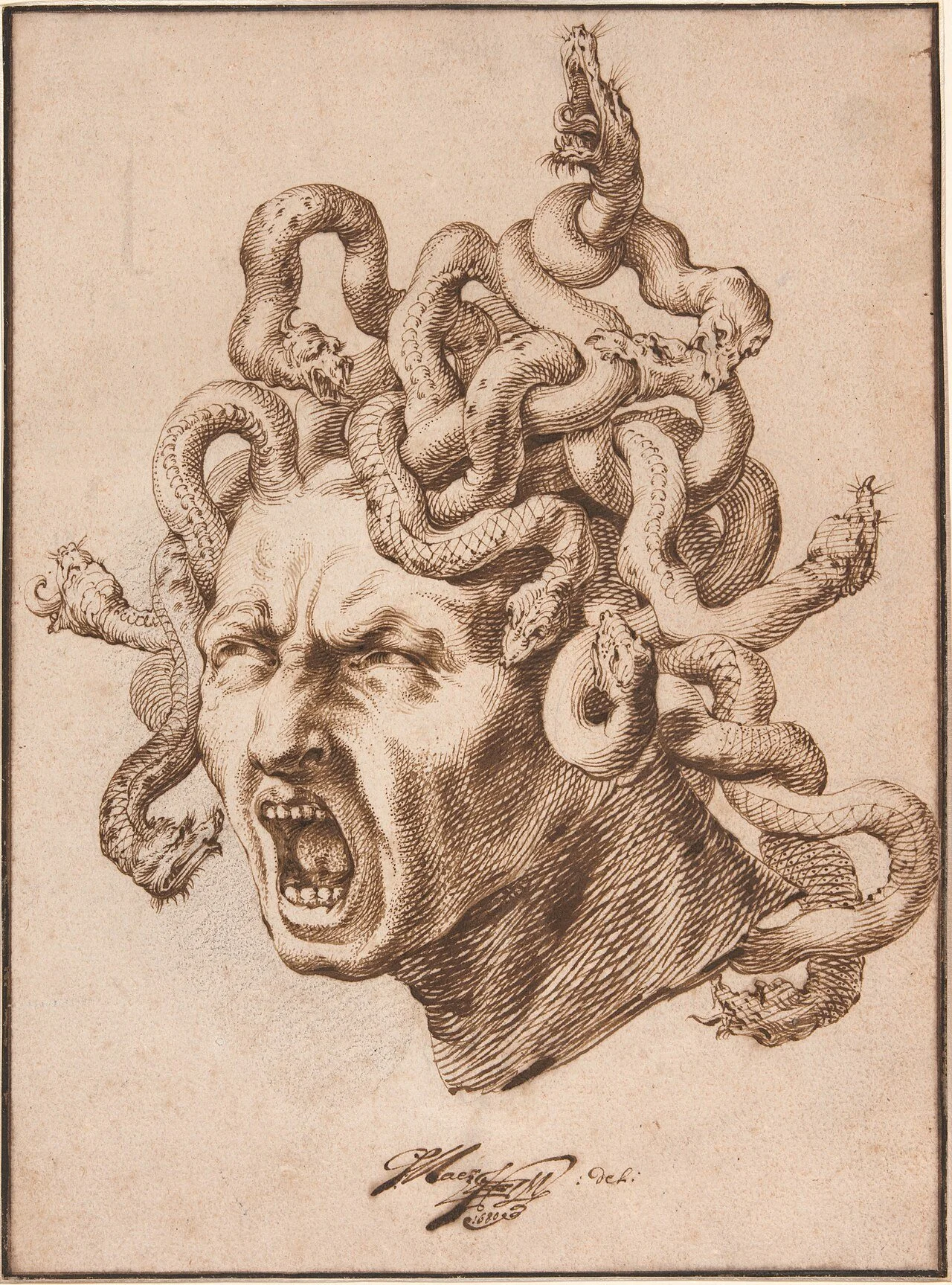
Her own monstrous power only becomes a shield for protection, lending the same notion as the rites in the ancient Arabic world of mating with the ghoul and sucking on her breast to have the protection and relation with the illicit.
Both children of flight and wonder like Pegasus, bringing fresh springs with every strike of his hooves while also mothering the Echidna (Mother of Monsters) who birthed legendary children like Cerberus (Three headed hound), The Hydra (Gian multiheaded serpant), The Chimera, The Spinx among many of the infamous retinues that morph into protective chtnonic deities which act as the opposing force enabled by “chaos”.
These were the myths that rooted us back to ancient civilizations’ ways of dealing with chaos, the unseen, and the othered.
Do we see the demonization of the othered in our current world?
Are the desires of those in power rapturing our communities and sense of connection in the modern world? Where do those monsters go if not in our own landscapes of reality?
The edges of our towns, where the lost wander and find the Ghoul as the fated companion to the loneliness our 21st-century world creates? The Jungle becoming concrete buildings and our desire and comfort all reliant on algorithms and fleeting, mercurial trends?
Where are the roots, and how deep can we go to find comfort and nourishment when the dopamine from the very mercurial world we live in subsides? That’s what Taurus III has shown me!
Santa Marta The Dominator
The myth and stories of Medusa, the Ghoul, remind me of the legends and tales that gave rise to the figure of the snake woman in Caribbean and southern Latin American folklore. She is integrated into the spirit of Dominican voodoo known as (21 Division).
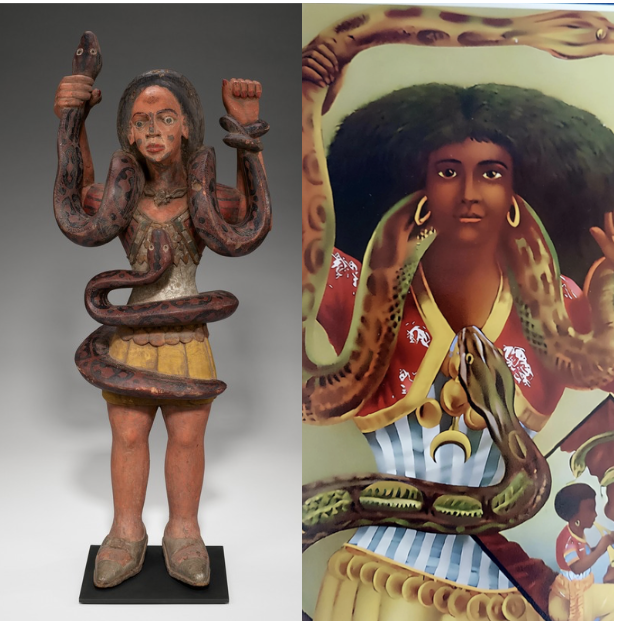
We observe the European syncretization of the Catholic saint who dominated the dragon, the Tarasca, spraying it with holy water and invoking the name of God. This image of her dressed in white and green is the "sanitized" epithet referred to and used in European grimoires.
Translation of the conjuring of Santa Marta of antiquity by Júlia Carreras Tort
“Marta, Marta, not the saint or the worthy or the worthy of begging, nor the one who is on the altar, but the one who at night you walk through the beredas and the days for the encrebelladas, I conjure you with Satan and with Barrabas, with Bercebu and all the devils, and with the lame devil, who runs more than everyone else, that you all go to Fulano and give him time to dress and bring him by points before me and my eyes without hurting him."
This Saint arrives in the New World, where her light ivory skin is transformed into that of an African woman with curly hair and a snake around her neck. Devotees from the Dominican Republic and Puerto Rico invoke her for the same love spells, giving her the new name:
"Santa Marta (La Dominadora)”
Something that is not found in the European conceptions or representations of this saint, which highlights the singular melting pot from which this figure of the "lady snake" has emerged. Reference is made to "Mami Wata", the snake charmer and mermaid goddess whose name derives from "Mother Water".
The migration of Caribbean peoples brought this spirit to the coasts of eastern America and to the hoodoo/conjuring traditions. Botany and spirit shops in New York and Florida offer candles, mojo bags with objects and amulets similar to this spirit, which have reached the hands of those who may have moved away from the roots of the spirit they invoke to tie a lover.
Her root ritual candles are of a classic green and evoke his anger, similar to the prayer mentioned above, to disturb the spirit of the desired love object until it reaches the feet of the supplicant. An Algolian spirit, if you ask me!
TAURO III LOS PICOS DEL TORO
Si naciste entre el 11 y el 20 de mayo, vemos al Sol danzando a través del tercer decanato de Tauro, el lugar más denso donde la humanidad no es más que una oruga en la vasta jungla y terrenos de tribulaciones que nos hacen cuestionar incluso a nuestro propio creador.
“El tercer decanato (de Tauro) representa una confrontación con factores destructivos que impiden la plenitud. Inundaciones, sequías y pestilencias entran aquí para devastar lo que se ha sembrado. Hay que enfrentarse a los titanes oscuros de la naturaleza. Sin embargo, esas mismas tormentas se agitan también en el interior de cada individuo. ” - 36 Caras Tauro III
Fuerzas más allá de lo humano, semejantes a los Titanes y a las deidades taínas como el Guabansex, que descendía corriendo para destruir a través del poderoso Juracan (raíz de la palabra Huracanes) o para bendecir y prometer un nuevo amanecer tras la calma de las tormentas.
¿Qué son los Decanatos?
Los Decanatos son un antiguo sistema zodiacal de 10 grados que se implementó en sus inicios, pero no se utilizó con la misma intensidad y viveza que en la Edad Media. Su esencia se encendió, y se le añadieron representaciones y emanaciones multiculturales basadas en el linaje de las fuentes transmitidas por la tradición helenística.
En mi investigación sobre este decanato a lo largo de la historia, consultando "36 Rostros" de Austin Coppock y "La Gran Introducción" de Abu Mashar (trad. Charles Burnett), se recuerdan las tribulaciones y la tenacidad que quienes nacen bajo este signo zodiacal afrontan con tanta valentía.
Con una luna nueva en este terreno de El zodíaco, un año después, regresa a esta serie de decanatos (¡ritmo taurino auténtico!).
Mi mirada se centra en la capacidad de Tauro III y su habilidad para crear raíces tan profundas que ni los peores vientos pueden arrancar aquello que reclamamos, cultivamos y fortalecemos en esta esfera del zodíaco.
Protegidos por los daimones más feroces y también los que conceden deseos, Austin Coppock, en "Faces", menciona la copresencia de las Buenas Damas (las Pléyades) ubicadas en el 29 de Tauro, armonizando y trayendo los susurros celestiales para calmar la mente mientras los espíritus del agua, la tierra y el fuego danzan al ritmo de lo Temporal.
"Para la India pre-védica, eran las siete madres que juzgaban a los hombres y a veces los herían con navajas en forma de luna.
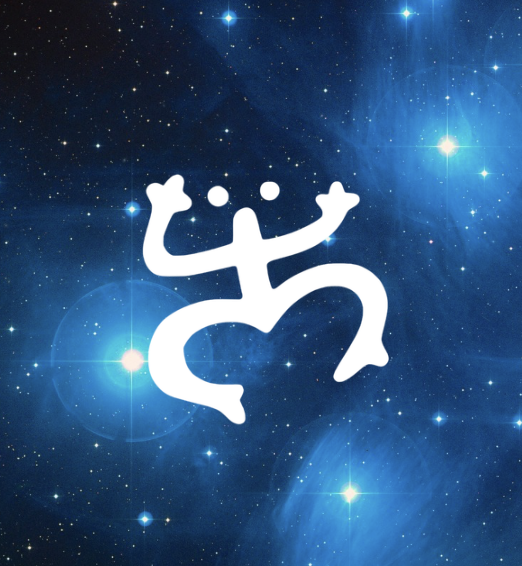
El coqui con la Pleiades
Para los egipcios, había siete diosas con las que los muertos debían encontrarse y por las que debían ser juzgados."
Bajo la influencia griega, las Pléyades formaban parte de un antiguo culto a Afrodita, quien dio a luz a siete hijas y las convirtió en una bandada de palomas que se transformaron en las siete estrellas de las Pléyades.
Burnedette Brady sobre las Pléyades
Para los TAINOS, este cúmulo estelar representaba la llegada de la temporada de lluvias.
En los mitos antiguos, los hijos de los caciques (chamanes) ascienden lentamente y se integran a las Pléyades, junto con la rana antillana, cuyo croar anunciaba o provocaba la llegada de la lluvia, descrita como "lluvia o agua vertical".
Esencial para su mitología y un motivo interesante, ¡esta rana es la más tatuada en la diáspora puertorriqueña!
El Temporal (El Huracán)
El cielo se está oscureciendo
Todo tiene ansiedad
Ya se espera el cimbronazo
Va llegando el Temporal
"Santa María, libranos de todo mal" - Virgen María, líbranos de todo mal.
"Ampáranos, señora del terrible temporal".
Temporal, una canción folclórica clásica de Puerto Rico, refleja Tauro III.
Los sonidos del viento, la guitarra folclórica tradicional y las notas de fondo al final evocan a la Virgen María para que nos ayude en medio de la tormenta, para que nos proteja y nos libre.
Refleja las mismas tradiciones y maneras en que la gente afrontaba estos espíritus tumultuosos y las temporadas de tormenta que nos trajeron estas pruebas a los humanos. Del mismo huracán (María 2017) que ha desplazado a la isla hasta el día de hoy.
Los muchos demonios y personas en el poder que aparecen en las costas de la isla y venden la belleza de la isla por el oro más alto, cada vez que la calamidad golpea hasta el día de hoy... La misma pregunta se hacen las personas que perseveran no solo contra la naturaleza, sino también contra la colonización.
"¿Qué será de Puerto Rico, cuando llegue el temporal?"
El Ghoul y El Yunque
La fuerza protectora que habita en esas selvas tropicales la he invocado personalmente, tanto en busca de amistad y conexión como pidiendo ayuda a los mismos demonios que surgen en este reino de cuernos de toro.
La historia y la tradición que rodean a la estrella fija Caput Algol, presente en este tercer decanato del cielo.
Actualmente en el signo de Tauro 26, nos recuerda la mirada de las damas primordiales, demonizadas y rechazadas, que luego crecieron en poder y se convirtieron en parte del séquito ctónico que se me apareció a través de la diáspora latina como Santa Marta.
Mientras me encontraba en las selvas de El Yunque, la presencia de este espíritu se hizo más fuerte, pero para muchos otros, no versados en lo esotérico, se trata de historias de estar perdidos y desplazados en esta misma selva, conocida por ser el lugar de aterrizaje de lo extraño, demonios, ovnis en las representaciones del mundo moderno e incluso los cuentos populares de jefes engañados por aquello que habita en la cima de... ¿qué montaña? El Pico del Toro. (OK TAURO III)
Todo esto evoca los epítetos más oscuros, ctónicos y relacionados con esta estrella, conocida por su contexto sombrío, ¡pero nunca del todo comprendida!
Provenientes del árabe ra's al-ghūl, que significa "cabeza del demonio" (o ghoul), estos espíritus son conocidos clásicamente como las energías vampíricas y alienantes de nuestro mundo.
El ghoul oculta su maldad conduciéndonos a la soledad y al extravío. Ali A. Olomi, en su podcast sobre el ghoul, afirma que es la "encarnación y la amenaza de la soledad" lo que nos lleva a buscar cualquier cosa en busca de una sensación que no nos satisfará.
Muchos de quienes hacen pactos con este tipo de espíritus maman del pecho de la Reina del Ghoul (Ghola), adoptando los aspectos monstruosos y perversos de nuestro mundo como parte inherente de su identidad.
¿Cómo nos separamos de las partes monstruosas de nosotros mismos? Lo más interesante es la mención de que el ghoul devora a los humanos extraviados, llevados a lugares lejanos y remotos, sin tribu y vulnerables.
"Cuando regresamos del desierto, consumidos por el ghul, nos convertimos a su vez en ghul y comenzamos a consumir a otros. Empezamos a devorar la carne de quienes fueron nuestros hermanos y hermanas. ¿Qué son entonces el ghul y el ghula? Es la ansiedad del deseo sin intimidad." - Ali A Olomi.
Curiosamente, esto coincide con la historia de un cacique chamán que subió a una de las cumbres de El Yunque, el Pico del Toro, donde el diablo lo engañó y lo ató a una cueva para atraer a otros caciques y miembros de la comunidad a correr la misma suerte.
Solo se les libera en un día específico del año, por una sola noche. Qué interesante paralelismo entre las nociones árabes de perderse en el desierto y perderse en la selva.
Muchos hablan de una mujer vestida de blanco que recorre las tierras cercanas a El Yunque y a quien se ve llamando a los excursionistas y desorientándolos.
Todas estas consideraciones se tuvieron en cuenta al visitar este lugar y al dejar ofrendas antes y después de que los espíritus ctónicos de la selva derramaran su poder para bendecir y también para maldecir.
Lo que siguió fueron sueños sobre los taínos y la gente de Borinquen y los dolores que sufrían, siendo llevados visceralmente a las profundidades de la selva solo para encontrarse con un conquistador y sufrir aflicciones muy saturninas que solo me reflejaban el dolor que aún mora en esos árboles y las muchas deudas que los colonizadores tienen con esa tierra en particular.
Tras meses de alquimia, reflexión y desciframiento de los numerosos presagios y secretos otorgados por el dios.
«Incluso mi amigo íntimo, alguien en quien confiaba, alguien que compartía mi pan, se ha vuelto contra mí».
Caminar junto a un Ghoul y ponerme en manos de una iniciación, recordando haber llevado a Kosmesis a las «tierras blancas», como las llamaban los taínos.
Al espíritu más benévolo, Yucahu, se le ofrecieron ofrendas joviales, llaves con coronas y libaciones en busca de comunidad, estabilidad y exaltación en la amistad.
El descenso del espíritu y la LLUVIA (reloj que las Pléyades presentan) fue el resultado de este rito iniciático, junto con la promesa de mi Saturno en Tauro que traería consigo lo Temporal.
Para alcanzar el estado de lanzamiento el 18 de agosto, ascendí por los senderos de los Ángeles en El Yunque, sangre, sudor, brujas, terrores y presagios de mi propia familia sobre los peligros que llamaban a cada puerta buscando mi fortuna.
Me arrebataron mi propia VOZ, pero no pudieron quebrar un alma que descendió de esas mismas montañas. La deidad suplicó bajo los cielos más auspiciosos por los próximos 12 años. El Jurancan descendió, y para cuando Bad Bunny subió al escenario, ¿la iniciación al Tercer Decanato de Tauro estaba completa?
Kosmesis Y Medusa
La creación de Kosmesis y la imposición del peso de la exaltación en mi esfera comunitaria me mostraron el valor y el poder de la Magia Talismánica del Mundo Antiguo.
Estos rituales y ritos cambian destinos literales, y al participar activamente en uno de los momentos más álgidos de la magia en mi isla natal, los espíritus me enseñaron las lecciones, el poder y la responsabilidad de lo que había conjurado y creado, y de a quiénes había traído a mi hogar.
Mientras que Algol promete extraviarse y el caos tras la envidia, el susurrador y aquellos que atan nudos, la tenacidad de la oración, la sabiduría ancestral literal y la intervención de los espíritus benéficos que cuidamos y nutrimos en nuestros jardines taurinos, transforman la piedra en esmeralda y desafían la mirada de los ghouls.
No podemos olvidar que esta iconografía surge tras la representación de hombres que sucumben a las mismas tentaciones de la Belleza y el Encanto; ser fascinado por una musa es convertirse en una estatua en su jardín de delicias. ¿Qué poder anhelaba la Dama Atenea, y en qué medida se considera la tarea encomendada por el rey y el ascenso del matador de dragones, Perseo, en la representación histórica de esta musa?
Clarísima forma
de las Gorgonas nec pars potuit laudatior illa
lights plures capitis concurrere proci.
Relata que con envidia contempló el cabello de la dama: se dice que el gobernante del mar (Poseidón) evitaba el templo de Minerva. aversa est faciemque inproba palla
gorgone velavit Pallas neve hoc inpune fuisset,
gorgoneum crinem turpes mutavit in hydros."
— Ovidio, Metamorfosis (4.794–801)
Traducción:
“La forma más brillante no podía ser más alabada
que la de las Gorgonas (el cabello de Medusa), y muchos pretendientes acudían a las luces de su cabeza.
Relata que, con envidia, observó el cabello de la dama: se dice que el rey del mar (Poseidón) evitaba el templo de Minerva.
Ella se apartó, y su rostro se cubrió con el manto de una gorgona; Palas, para evitar que esto quedara impune, no convirtió el cabello de la gorgona en aguas turbias.
Fue maldecida por las acciones de un hombre. ¿Cómo nos revela esto acerca de los temores de las culturas antiguas hacia el otro, el extraño y la belleza de otras tierras?
Donde su sangre se derrama, las algas se convierten en corales rojos, antiguos talismanes atropoicos de protección que perduran hasta nuestros días. ¿Y en el abrasador desierto del Sahara? En la Argonáutica, también se atribuyen víboras venenosas a su picadura, que brotaban de las gotas de su sangre.
Su propio poder monstruoso se convierte en un escudo protector, evocando la misma noción que los ritos del antiguo mundo árabe de aparearse con el ghoul y mamar de su pecho para obtener protección y una relación con lo ilícito.
Ambos hijos del vuelo y la maravilla, como Pegaso, traían manantiales frescos con cada golpe de sus pezuñas, y también eran madres de la Equidna (Madre de los Monstruos), quien dio a luz a hijos legendarios como Cerbero (el perro de tres cabezas), la Hidra (la serpiente gigante de múltiples cabezas), la Quimera y la Esfinge, entre muchos de los infames séquitos que se transforman en deidades protectoras que actúan como la fuerza opuesta posibilitada por el "caos". Estos fueron los mitos que nos enraizaron en las formas en que las civilizaciones antiguas lidiaban con el caos, lo invisible y lo diferente.
¿Observamos la demonización del otro en nuestro mundo actual? ¿Están los deseos de quienes ostentan el poder arrebatando a nuestras comunidades y nuestro sentido de conexión en el mundo moderno? ¿Adónde van esos monstruos si no a nuestros propios paisajes de la realidad?
¿A los márgenes de nuestras ciudades, donde los perdidos vagan y encuentran al Ghoul como compañero predestinado de la soledad que crea nuestro mundo del siglo XXI? ¿Acaso la jungla se está convirtiendo en edificios de hormigón y nuestro deseo y comodidad dependen de algoritmos y tendencias fugaces y cambiantes?
¿Dónde están las raíces, y hasta qué punto podemos llegar para encontrar consuelo y sustento cuando la dopamina del mundo tan volátil en el que vivimos disminuye? ¡Eso es lo que me ha mostrado Tauro III!
Santa Martha La Dominadora
El mito y los relatos de Medusa, la Ghoul, me recuerdan las leyendas y cuentos que dieron origen a la figura de la mujer serpiente en el folclore caribeño y del sur de Latinoamérica. Ella se integra al espíritu del vudú dominicano.
Observamos la sincretización europea de la santa católica que dominó al dragón, la Tarasca, rociándolo con agua bendita e invocando el nombre de Dios. Esta imagen de ella vestida de blanco y verde es el epíteto "sanitizado" al que se hace referencia y que se utiliza en los grimorios europeos.
"Hay una Marta buena y una Marta mala: la buena es una salvadora, la mala es una santa bruja que vuela por los aires y comanda tropas demoníacas… su día es el 29 de julio en la tradición europea".
Traducción del conjuro de Santa Marta de la antigüedad por Júlia Carreras Tort
“Marta, Martica, no la santa ni la digna ni la digna de rogar, ni la que está en el altar, sino la que de noche andas por las beredas y los días por las encrebelladas, yo te conjuro con Satanás y con Barrabás, con Bercebú y todos los diablos, y con el diablo coxo, que corre más que todos, que todos vais a Fulano y le deis tiempo para vestirse y le traigáis por puntos ante mí y mis ojos sin hacerle mal.”
Esta epifanía llega al Nuevo Mundo, donde su piel clara de marfil se transforma en la de una mujer africana de cabello rizado y una serpiente al cuello. Devotos de la República Dominicana y Puerto Rico la invocan para los mismos hechizos de amor, dándole el nuevo nombre de "Santa Marta (LA DOMINADORA)".
Algo que no se encuentra en las concepciones o representaciones europeas de esta santa, lo que resalta el singular crisol del que ha surgido esta figura de la "señora serpiente". Se hace referencia a "Mami Wata", la encantadora de serpientes y diosa sirena cuyo nombre deriva de "Madre Agua".
La migración de pueblos caribeños trajo este espíritu a las costas del este de América y a las tradiciones hoodoo/conjuro. Botánicas y tiendas de espíritus en Nueva York y Florida ofrecen velas, bolsitas mojo con objetos y amuletos similares a este espíritu, que han llegado a manos de quienes quizás se han alejado de las raíces del espíritu al que invocan para atar a un amante.
Sus velas de rituales de raíces son de un verde clásico y evocan su ira, similar a la oración mencionada anteriormente, para inquietar el espíritu del objeto amoroso deseado hasta que llegue a los pies del suplicante. ¡Un espíritu algoliano, si me preguntan!